A Tiny Duck Becomes the Unexpected Star of the Tech World
A viral moment at a recent conference has turned a small, open-source robot into a potential holiday sensation, shifting the focus of the AI industry from security concerns to consumer fun.
By Jonathan Pierce ·
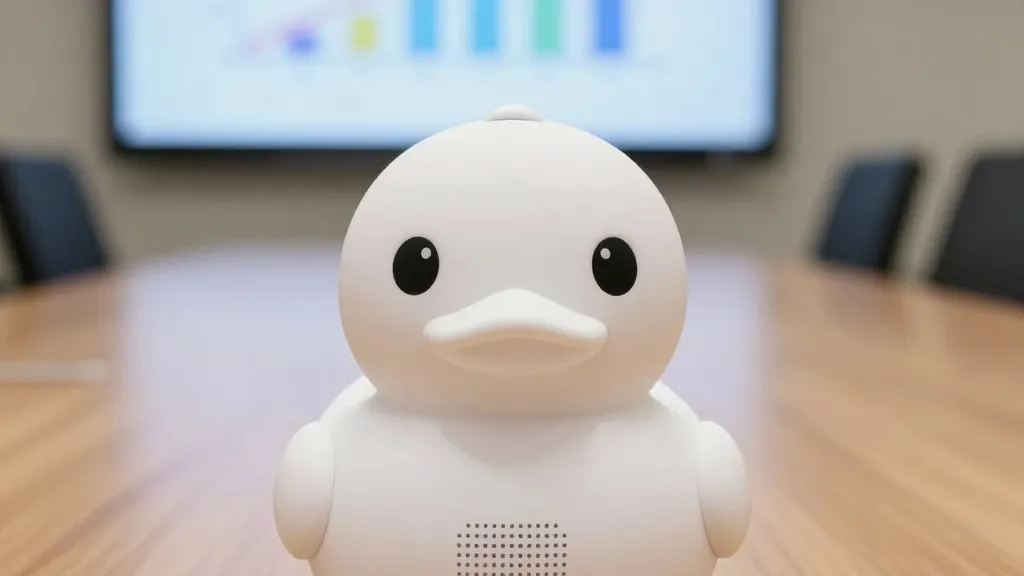
The artificial intelligence sector has been plagued by a wave of anxiety this week, with frequent reports blaming AI involvement for a series of cyberattacks. This grim narrative creates a stark contrast with the sudden, widespread fascination surrounding a small, waddling robot. The tension between AI as a potential security threat and AI as a source of simple, tangible joy has found its focal point in the Microduck, a device that has captured the public’s imagination far beyond the usual tech enthusiast demographic.
The turning point occurred earlier this week during the GTC Berlin conference. In a video that quickly circulated across social media, Nvidia CEO Jensen Huang was seen interacting with a flock of these robots. The Microducks were shown stomping their feet, emitting sounds reminiscent of the droid R2-D2, and performing specific actions like sitting, lying down for a simulated nap, and executing somersaults upon receiving voice commands. The charm of the demonstration was immediate and potent, leading to a surge in consumer interest that outpaced initial expectations.
The commercial response was swift and significant. By the day following the keynote, preorders for the Microducks had surpassed 20,000 units. This figure was confirmed by Clem Delangue of Hugging Face, who noted the volume via social media. The rapid uptake suggests that the product has transcended its technical origins to become a mainstream consumer item, potentially positioning itself as one of the most sought-after gifts of the upcoming holiday season.
To understand how a niche tech gadget achieved such visibility, it is necessary to look at the corporate lineage of the product. The Microducks are open-source devices originally created by Pollen Robotics. Pollen was acquired by Hugging Face in 2025, a move that integrated the robotics startup into a broader AI ecosystem. Later, in September, Nvidia acquired Hugging Face, effectively making the Microduck an Nvidia product. This is not Hugging Face’s first foray into robotics; the company previously released the Reachy Mini, another compact robot that gained a following for its approachable design.
The technical foundation of the Microduck relies heavily on Nvidia’s existing technology stack. The robots are trained through simulations where they learn basic behaviors such as walking, sitting, and standing. These pre-loaded tricks are shipped with the unit, allowing for immediate interaction without complex setup. However, the open-source nature of the device allows for deeper customization. Owners are encouraged to train their specific units with new maneuvers and subsequently share these custom instructions with the wider community, fostering a collaborative development environment.
The marketing and promotional materials for the Microduck have also played a role in its broad appeal. Unlike many tech products that target a specific professional or hobbyist niche, the promotional videos feature adults engaging with the robots. This visual strategy signals that the device is intended for general entertainment and companionship, not just for children or engineers. Delangue has suggested that the Microduck could become the best-selling robot of the year, a title that would likely be attributed to its appeal to a wide age range rather than a specific demographic.
With delivery expected in time for Christmas, the Microduck is well-positioned to dominate the holiday toy market. The combination of viral marketing, corporate backing from major tech players, and a design that prioritizes cuteness over complex utility has created a perfect storm of consumer demand. The device serves as a tangible, physical anchor for an often abstract and sometimes frightening technology narrative.
As the AI industry grapples with the implications of its rapid integration into cybersecurity and other critical sectors, the Microduck offers a different perspective. It demonstrates that artificial intelligence can be playful, accessible, and undeniably fun. For many consumers, watching the video of the robots interacting with a high-profile tech executive provided a much-needed respite from the news cycle’s darker themes. The ease with which people are ordering the device suggests a strong desire for AI that is friendly and engaging, rather than merely powerful or protective.
The future of the Microduck will likely be shaped by community input and continued corporate support. As users share new tricks and the device becomes more common in homes, it may evolve into a standard platform for consumer robotics. The success of the Microduck indicates that the market is ready for AI products that prioritize emotional connection and simplicity. In a year marked by technical challenges and security fears, the humble duck has emerged as an unlikely symbol of optimism and innovation.
Ultimately, the story of the Microduck is a testament to the power of viral moments in the digital age. A single keynote demonstration transformed a specialized open-source project into a mass-market phenomenon. As the units begin to ship, the Microduck will serve as a physical reminder that technology does not have to be intimidating to be impressive. It is a small, waddling step toward a future where AI is not just a background force, but a visible and enjoyable part of daily life.
Source: TechCrunch