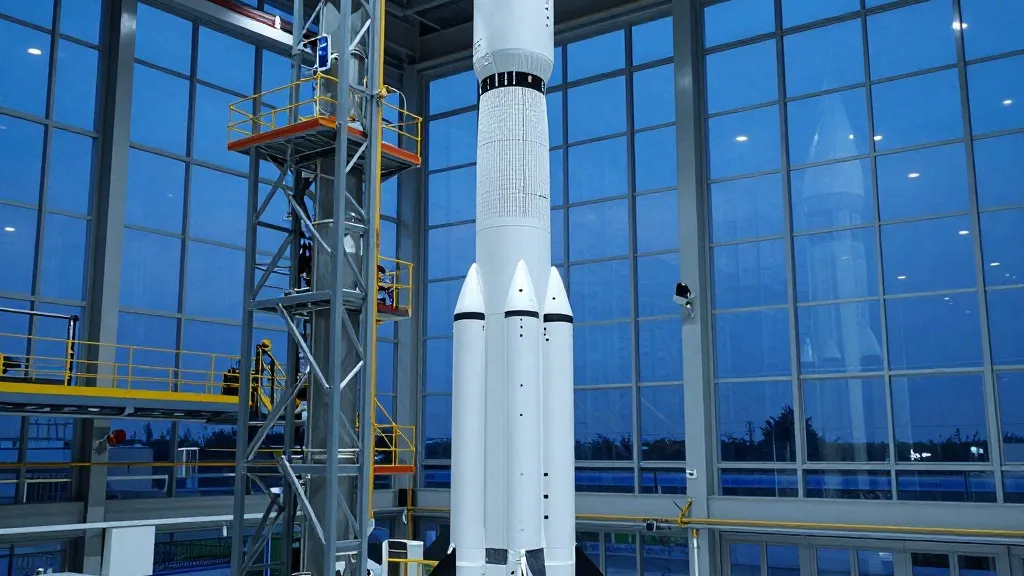
NASA Lander Architecture: Revised Path to the Moon
NASA's briefing outlined specific launch schedules and docking procedures for its lunar landing missions.
By Ishani Kapalli ·

NASA has set a new course for its lunar ambitions, outlining a revised plan to return astronauts to the moon's surface.
At a press conference held October 23, 2026, agency officials detailed a mission architecture for landing humans on the moon by 2028. This briefing marks the first time NASA has publicly confirmed significant changes to its previously discussed plans. The updated timeline schedules Artemis III, a demonstration mission involving docking with both the Blue Moon and Starship vehicles near Earth, for summer 2027. This will be followed by Artemis IV in 2028, which is slated to carry out an actual landing on the lunar surface.
The revised plan specifies different operational procedures for the two commercial landers under development. For SpaceX's Starship, the Orion spacecraft is now slated to dock with the lunar lander in high-Earth orbit before the combined vehicle begins its transit to the moon. The mission profile for Blue Origin's New Glenn rocket involves four launches, but notably excludes any spacecraft-to-spacecraft refueling operations. Additionally, the architecture for the Blue Moon lander permits a potential rendezvous with Orion in low-lunar orbit.
NASA Administrator Jared Isaacman addressed the agency's readiness to proceed with the updated schedule. “This is an achievable path we are on right now,” Isaacman stated. “We have the mandate, we have the resources, and the support from our stakeholders to be able to execute, and that’s what we intend to do.”
The decision to alter the mission architecture is a direct result of earlier programmatic changes. Specifically, the plan for SpaceX's Starship no longer requires a docking maneuver with Orion in a near-rectilinear halo orbit around the moon. This requirement had previously presented significant energy and operational challenges. The problem was resolved earlier this year when NASA canceled the Lunar Gateway project, eliminating the need for such a rendezvous.
The agency is now tasked with meeting these newly defined timelines for its crewed lunar landing program.
Source: Ars Technica