Apple's 25-Year Legacy: The iPod That Defined Digital Music
A quarter-century after its debut, the original iPod's compact design and seamless integration with iTunes reshaped how consumers carried their music libraries.
By Robert Hayes ·
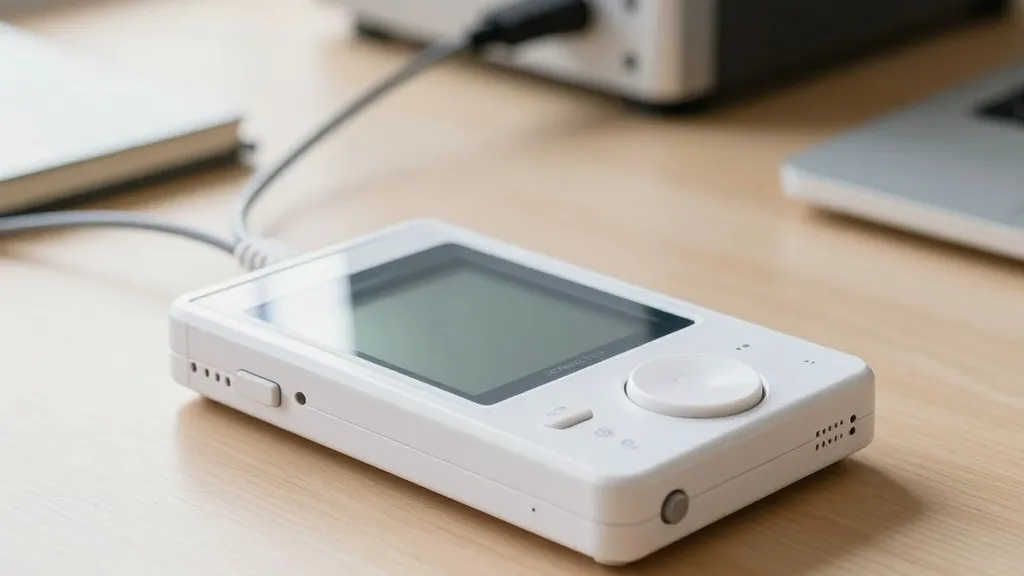
Twenty-five years ago today, Apple introduced a device that promised to revolutionize personal audio, creating a tension between the bulky hardware of the early 2000s and the emerging desire for portable convenience. On October 23, 2001, CEO Steve Jobs took the stage to unveil the original iPod, a pocket-sized digital music player that challenged the status quo of the era. The central conflict of the launch was clear: while portable music players existed, none had successfully balanced capacity, usability, and form factor in a way that appealed to the mass market. Apple sought to fill this void by offering a device that could hold an entire music library in a package small enough to fit in a pocket.
The backdrop for this release was a company in the midst of a significant revival. By late 2001, Apple had moved past its earlier struggles with the beige hardware of the past, establishing itself firmly in the Mac OS X era with popular products like the iMac. Jobs envisioned the Mac as the central hub of a user's digital life, connecting cameras, camcorders, and eventually, portable audio. He identified music as a massive, underserved target market, noting that while competitors like Sony, Creative, and Sonic Blue had offerings, they had not yet found the right formula for digital music.
The original iPod was positioned as an MP3 player with CD-quality sound, supporting formats such as MP3, WAV, and AIFF. Its primary selling point was its 5GB storage capacity, which Jobs highlighted as enough to hold 1,000 songs, specifically defined as 1,000 typical pop-length MP3s at 160Kbps. This capacity was achieved through a partnership with Toshiba, which provided an ultra-compact 1.8-inch hard drive that was only 0.2 inches thick. This component allowed the device to maintain dimensions of 2.4 by 4 by 0.78 inches, weighing just 6.5 ounces, a size comparable to a deck of cards and lighter than most cell phones of the time.
Beyond storage, the device featured several technological advantages that Jobs emphasized during the presentation. The iPod utilized FireWire 400 for data transfer and charging, a connection that was significantly faster than the USB standards prevalent at the time. Jobs claimed that transferring a single CD of MP3s took only five to 10 seconds via FireWire, whereas USB connections could require up to five minutes. For a full library of 1,000 songs, the estimated transfer time was 10 minutes on the iPod compared to five hours on competing USB devices. The device also included 20 minutes of skip protection and a rechargeable lithium-polymer battery capable of 10 hours of continuous playback, with an 80% charge achievable in one hour.
The user experience was a critical part of the product's identity, relying on what Apple described as legendary ease of use. The design featured a minimal aesthetic with a specially engineered scroll wheel that used a piezoelectric clicker for tactile feedback, allowing for single-handed navigation. This interface enabled users to quickly locate music by artist, playlist, or song. During the initial demonstration, the first track played was 'Building a Mystery' by Sarah MacLachlan, showcasing the device's audio quality and responsive controls.
The launch was further solidified by the simultaneous release of iTunes 2, which introduced advanced features like MP3 CD burning and, crucially, Auto-Sync. This feature ensured that the music libraries curated on a Mac were automatically mirrored to the iPod whenever the device was connected for charging or data transfer. The iPod also functioned as a FireWire hard disk drive, adding utility beyond music playback. This seamless integration between the computer and the portable player was a key differentiator that competitors had not yet achieved.
The impact of the original iPod extended well beyond its launch date. It remained a staple in Apple's product lineup for over a decade, sitting alongside the iPhone, which debuted in 2007. While the smartphone eventually made dedicated music players redundant, the iPod line continued until the release of the 7th-generation iPod Touch in May 2019. Although the product line was left unmaintained for a few years, it was officially discontinued in May 2022, marking the end of an era that had fundamentally changed how people listened to music.
Source: Tom's Hardware