Warhound Unveils $200 Million Bid to Engineer Superior Military Dogs
A new venture backed by Colossal and Anduril aims to use genetic editing and high-tech gear to solve the U.S. military's dwindling supply of working dogs.
By Rahul Mehta ·
The U.S. military’s canine workforce is facing a quiet crisis, and a new startup claims it has the genetic solution.
On Thursday, Warhound emerged from stealth mode, revealing a $200 million funding round that values the company at $1.2 billion. The venture is backed by high-profile investors including Sequoia, 8VC, Corner Ventures, and In-Q-Tel, a firm supported by the CIA and other U.S. intelligence agencies. The project is a collaboration between Ben Lamm of Colossal Biosciences and Palmer Luckey of Anduril, who first discussed the concept at a conference about a year ago. Their goal is to create genetically engineered dogs for the U.S. military, law enforcement, and emergency response teams, designed to handle tasks that are too dangerous for humans or too complex for machines.
The company points to a significant gap in the current supply chain: more than 80% of the U.S. military’s working dogs are imported from Europe, and fewer than half of those arrive fit for service. Warhound aims to end this reliance on foreign nations by breeding dogs locally with specific traits suited for demanding missions. Lamm explained that many imported dogs fail training due to inherited issues like poor eyesight, hip dysplasia, or high cancer risks. By studying top-performing breeds like the Belgian Malinois and German Shepherd, the team has collected cell lines to edit the dogs' genes, removing weaknesses and adding performance-enhancing traits.
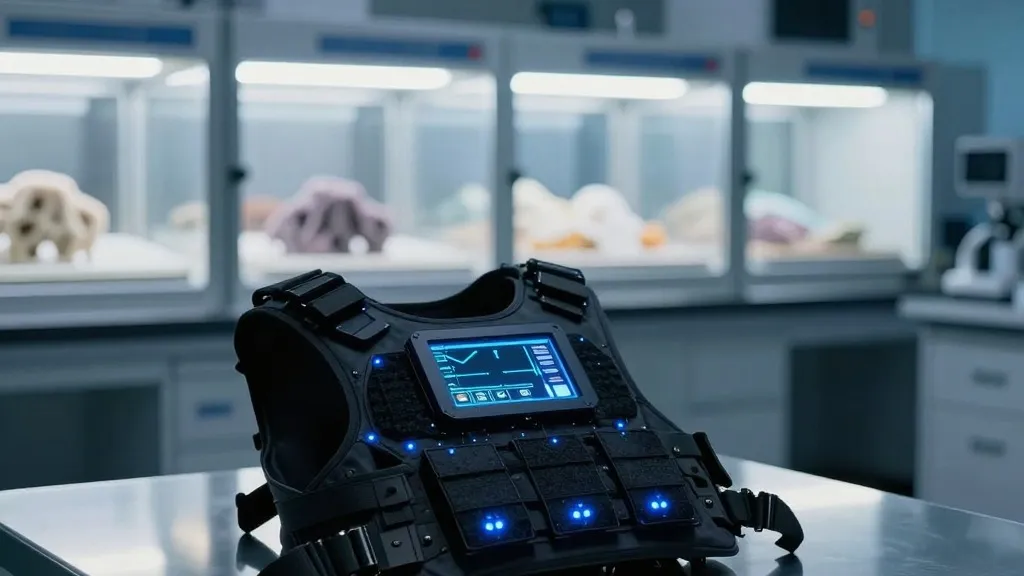
While Colossal provides the biological engineering, Anduril will equip the dogs with software and hardware to aid both the animal and its handler. This includes protection vests and goggles that offer situational awareness. Lamm described the concept as adding technology "on top of the dog, not in the dog," such as bulletproof vests with data sensors that relay real-time information to handlers. This dual approach aims to make the dogs safer, healthier, and more effective in the line of duty, which in turn protects the human soldiers working alongside them.
The timeline for these new animals is ambitious. Lamm stated that the first batch of dogs is currently being cloned and incubated, with births expected early next year. If all goes well, the dogs could begin service within two years. Viagen, another company owned by Colossal, will handle the cloning process, leveraging technology that has already proven successful in Colossal’s endangered species programs. Currently, Colossal is best known for its de-extinction efforts, such as bringing back the dodo and the mammoth, using AI and gene cloning techniques that are now being applied to canines.
Warhound has not yet determined its pricing structure but expects to sell to first responders, the Department of Defense, and police forces. While the company has briefed various government groups, it has not yet finalized specific government approval protocols. Lamm noted that each dog will undergo standard military training and will be managed by the purchasing agency. In terms of civilian safety, the company plans to work under the guidance of the American Humane Society to certify its training programs. The society has expressed support, stating it looks forward to ensuring the animals are treated humanely and hoping that retired dogs from this program will enter its reunification program for a second life.
Open questions remain regarding the long-term health implications of genetic editing in such a high-stakes environment, as well as the public reception of engineered working animals. However, with $200 million in the bank and backing from both tech and intelligence sectors, Warhound is positioned to significantly alter the landscape of military canine support. The first generation of these engineered dogs will serve as a critical test for the viability of combining advanced biotechnology with traditional service roles.
Source: TechCrunch