Cyan Lights: The New Federal Standard
Federal regulators are proposing a specific blue-green light to identify driverless vehicles, aiming to standardize how autonomous cars signal to the public.
By Jayden Sweiler ·
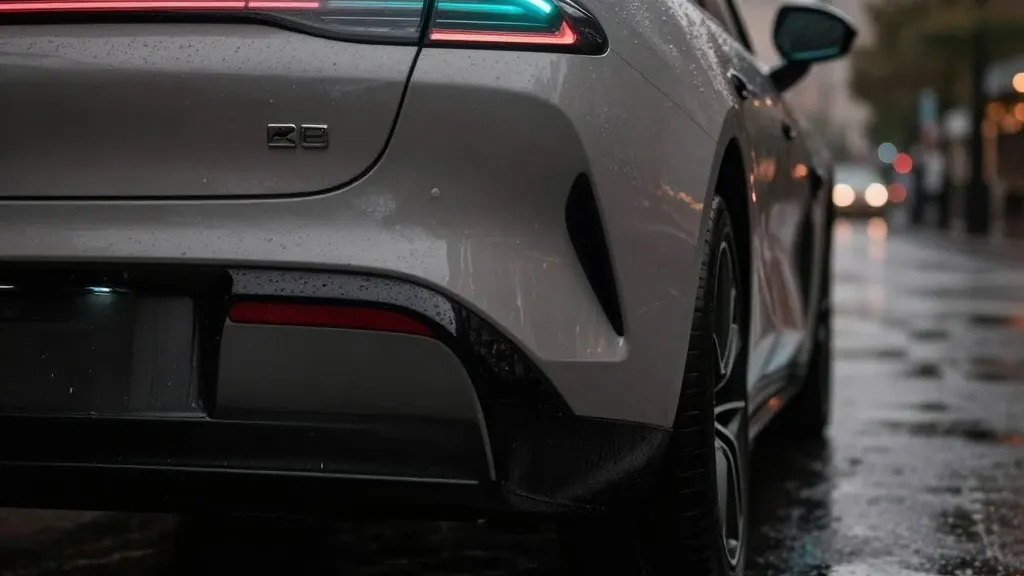
The number one visual gap in modern traffic is the color cyan, a hue currently absent from the standard automotive palette. Federal regulators have identified this specific shade as the definitive solution for signaling that a vehicle is operating without a human driver. After years of industry debate over how to communicate automation status through flashing text or audio alerts, the National Highway Traffic Safety Administration (NHTSA) has moved to codify a single, uniform answer. The proposed update to Federal Motor Vehicle Safety Standard No. 108 explicitly introduces cyan-colored marker lamps as the primary method for indicating that an automated driving system is in control.
The rationale behind selecting this specific blue-green color is rooted in avoiding visual clutter. The automotive industry has already saturated the visual spectrum with established meanings: red for brakes and emergency vehicles, amber for turn signals, and white for headlights. By choosing a color that is not currently assigned to any standard vehicle function, NHTSA aims to create a distinct signal that law enforcement and other road users can recognize instantly without confusion. This approach provides a clear visual cue that separates autonomous operation from traditional human-driven traffic, reducing the cognitive load on surrounding drivers.
While the adoption of these lights would be optional for manufacturers, the federal standardization of their color, brightness, and location is the critical component of the proposal. Currently, there is a risk of a fragmented marketplace where different companies use varying colors or intensities to denote autonomy. By establishing a uniform legal setup, NHTSA ensures that if an automaker like GM or Mercedes-Benz, or a robotaxi operator like Waymo, Nuro, or Zoox, chooses to implement the feature, they do so consistently. This uniformity allows for a common language on the road, regardless of the specific vehicle brand or service provider.
The proposal also addresses the physical realities of driverless architecture by removing outdated requirements that are irrelevant to vehicles without human occupants. Current regulations mandate the presence of physical hazard switches, manual beam shifters, and internal turn levers. NHTSA is proposing to eliminate these mandates, as they serve no function in a car designed to be driven by software rather than a person. Additionally, the agency is updating the 12.8-volt testing standard to accommodate modern LED architectures, preventing administrative hurdles for engineers building next-generation lighting systems. The proposal also considers removing rules that dictate the specific vertical placement of high-beam lights relative to low-beam lights.
This regulatory move is part of a broader Department of Transportation initiative to streamline the deployment of autonomous vehicles. The goal is to facilitate the creation of cars that lack traditional human controls, such as steering wheels and pedals, by removing the regulatory friction that currently complicates their design. However, the transition is not without friction; regulators are simultaneously enforcing existing rules strictly. Last month, NHTSA opened an audit query into the Tesla Cybercab to examine the technical data Tesla relied upon for its certification. That review focused on the absence of sideview mirrors, pedals, and a steering wheel, all of which are currently required under the existing FMVSS framework.
There is some precedent for this type of visual signaling, though it has not yet become universal. Mercedes-Benz previously received state-level approval for turquoise lights on its Level 3 Drive Pilot vehicles. Although the automaker has since shifted its strategy toward a Level 2++ system, the state approval demonstrated the viability of using distinct colors for automation status. The federal proposal now seeks to elevate this concept to a national standard, providing a clear path for the entire industry to adopt a consistent method for identifying driverless vehicles. As the industry moves toward full autonomy, this standardized light serves as a foundational element of road user communication.
The implementation of these changes will require manufacturers to adapt their designs and testing procedures to align with the new federal standards. For consumers, the introduction of cyan lights will serve as a recognizable indicator that they are sharing the road with a machine. For regulators, it represents a move toward a more coherent and safer traffic environment where the status of a vehicle's driver is immediately apparent. The next steps will involve public comment and final rulemaking, but the direction is clear: the future of autonomous signaling is blue-green.
Source: The Verge