Tesla Sets Q2 2027 Target for Unsupervised FSD, But Limits It to Robotaxi Zones
Owners may soon add their cars to Tesla's managed fleet, but the feature will only work within small, specific city boundaries.
By Yasmin Farouk ·
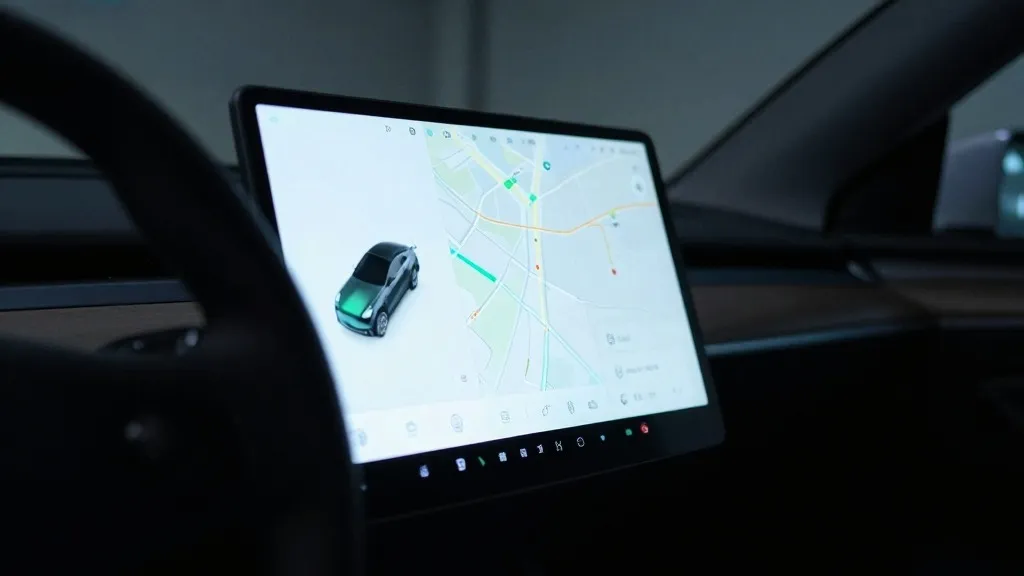
The gap between what Tesla promised and what it is now delivering has widened into a distinct operational divide. On the company's third quarter earnings call, AI chief Ashok Elluswamy confirmed that unsupervised Full Self-Driving will arrive for customer vehicles in the second quarter of 2027. However, the definition of that arrival has shifted significantly. It is no longer a universal software update that allows owners to travel anywhere in their own cars. Instead, the feature functions as an opt-in mechanism for adding personal vehicles to Tesla’s managed Robotaxi network.
This clarification addresses a question submitted by retail shareholders holding approximately 1.1 million shares. They asked when they could expect unsupervised FSD in their personal cars. Elluswamy’s response framed the next step not as a consumer product that drives users to any destination, but as a fleet integration. Owners would essentially be leasing their hardware to Tesla’s operations. This means the vehicle can only drive itself unsupervised within the specific geographic areas where Tesla already operates its Robotaxi service.
Those service areas remain limited. Tesla currently runs its Robotaxi service in six US metropolitan areas, but the actual operational zones cover small slices of those cities. In Miami, the zone mostly includes West Miami and a strip toward Doral and Sweetwater. Orlando and Tampa launched in July with similarly small geofences. The service generally avoids highways and harder parts of town, sticking to low-speed routes. In the Bay Area, the cars are not unsupervised at all because California rules still require a safety driver, a constraint Tesla faces because it has not released data to the state DMV beyond level 2 autonomous requirements.
The scale of the current operation is also modest. Tesla reported that Robotaxi reached nearly 2 million cumulative unsupervised miles by the end of the third quarter. This milestone was reached one month after the Cybercab joined the Austin fleet. Third-party tracking from this spring indicated that the number of fully driverless Teslas on the road was in the dozens. This stands in contrast to the hundreds of thousands Musk had previously discussed. Competitor Waymo had already entered Orlando and Tampa before Tesla and has logged over 3 million miles.
The current reality contrasts with the sales pitch that has driven FSD purchases for years. The original promise was a car that would eventually drive itself anywhere via a software update. In July 2025, Musk told investors that unsupervised FSD would be available for personal use in certain geographies by the end of that year. A year prior, he suggested he would be surprised if Tesla did not achieve unsupervised self-driving the following year. Additionally, owners of the older HW3 hardware have been told their computers cannot run unsupervised FSD at all, with no clear upgrade plan in place.
The new timeline and product scope suggest a more controlled rollout. The goal has moved from a personal vehicle that drives its owner anywhere to a car that works as a Robotaxi inside a small, controlled geofence. Elluswamy cited safety as the primary bottleneck, explaining why Tesla limits operations to low-speed roads. He predicted these safety issues would be resolved by next year, though he acknowledged uncertainty. For now, the Q2 2027 date represents a narrow step forward, limited to Tesla’s terms and zones, rather than the broad, location-independent capability many buyers originally anticipated.
Source: Electrek